U.S. military draws up plans for possible strikes in Nigeria after Trump order
The United States military has prepared contingency plans for possible airstrikes in Nigeria after President Donald Trump instructed the Pentagon to “prepare to intervene” to protect Christians from attacks by extremist groups, The New York Times reports.
According to the report, U.S. Africa Command submitted a range of operational options to the Pentagon in response to a request from Secretary Pete Hegseth to develop plans consistent with the president’s directive. The options are described in three tiers — “heavy,” “medium” and “light” — reflecting different levels of U.S. military involvement.
Under the “medium” option, the plans call for strikes by armed drones such as MQ-9 Reapers and MQ-1 Predators against insurgent camps, convoys and vehicles, backed by U.S. intelligence to ensure “precise and timely” targeting. The “light” option emphasizes intelligence sharing, logistics support and joint operations with Nigerian forces to combat Boko Haram and other Islamist groups accused of killings, abductions and attacks on churches.
Officials cited in the report acknowledged that limited airstrikes or drone raids are unlikely to end Nigeria’s long-running insurgency without a significantly larger campaign — similar in scale to past U.S. campaigns in Iraq or Afghanistan — an approach that is not being advocated in Washington.
PUNCH Online previously reported that Mr. Trump had threatened to deploy American forces to Nigeria if what he called a genocide against Christians did not stop; the Tinubu administration has vigorously denied the allegation.
China weighed in diplomatically on Tuesday, voicing support for Nigeria and rejecting foreign interference framed as concern for religion or human rights. “As Nigeria’s comprehensive strategic partner, China firmly opposes any country using religion and human rights as an excuse to interfere in other countries’ internal affairs, and threatening other countries with sanctions and force,” Chinese Foreign Ministry spokesperson Mao Ning said at a Beijing news conference.
Nigeria’s federal government has also rejected its inclusion on a U.S. list of countries accused of violating religious freedom, calling the designation the result of “inaccurate data and misrepresentation” of the nation’s security challenges. Information Minister Mohammed Idris said the country is battling terrorism, not carrying out religious persecution, and noted that both Christians and Muslims have been affected by extremist violence. He added that since 2023 the government has “neutralised over 13,500 militants and rescued more than 11,000 hostages,” and that Nigeria remains open to U.S. cooperation on counterterrorism while insisting on respect for its sovereignty.
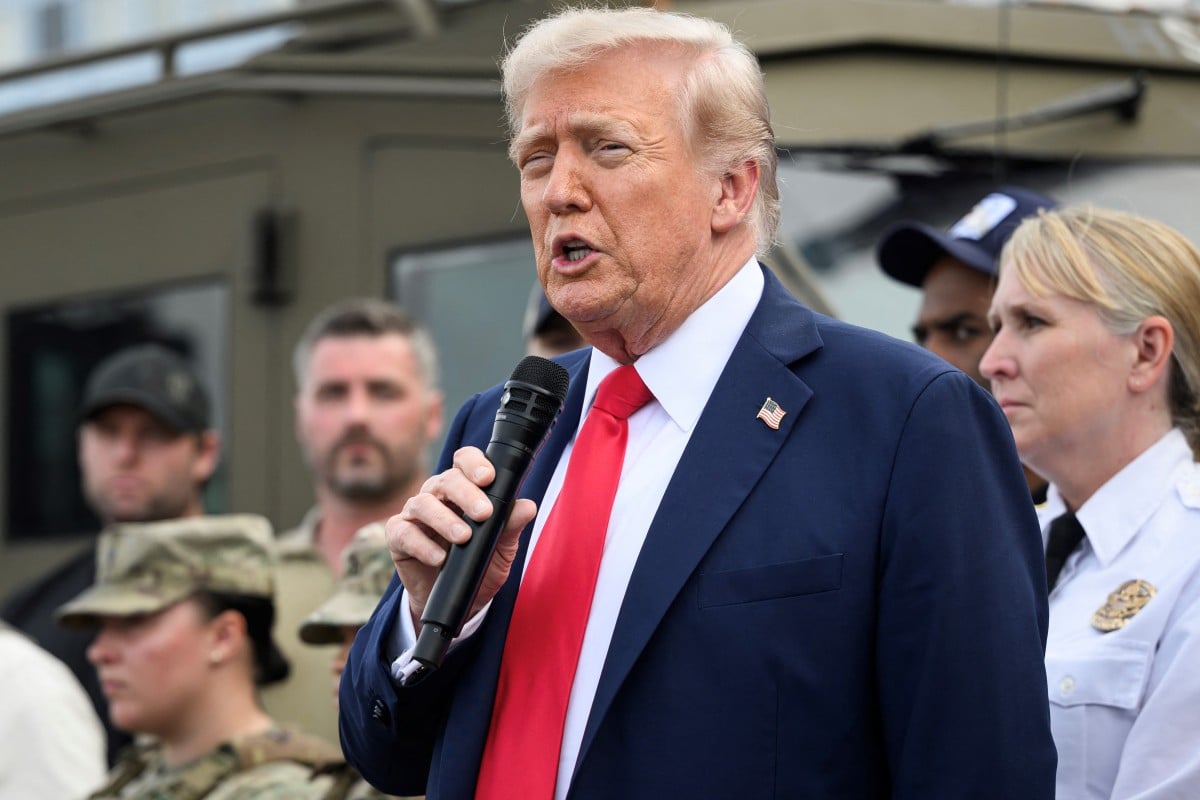
On Wednesday evening, President Trump reiterated his readiness to act should the alleged persecution continue. “Christianity is facing an existential threat in Nigeria,” he said. “The United States cannot stand by while such atrocities are happening there, and in numerous other countries. We stand ready, willing, and able to save our Great Christian Population around the World!”
The deliberations in Washington have heightened diplomatic tensions and renewed debate over whether — and how — the United States should become militarily involved in what critics describe as foreign religious conflicts. Military planners told the Times the “heavy” option would go as far as deploying an aircraft carrier strike group to the Gulf of Guinea, supported by fighter jets or long-range bombers to strike militant targets deep inside northern Nigeria.