Atiku: Targeted Subsidy Will Reduce Fuel, Transport, Food Prices
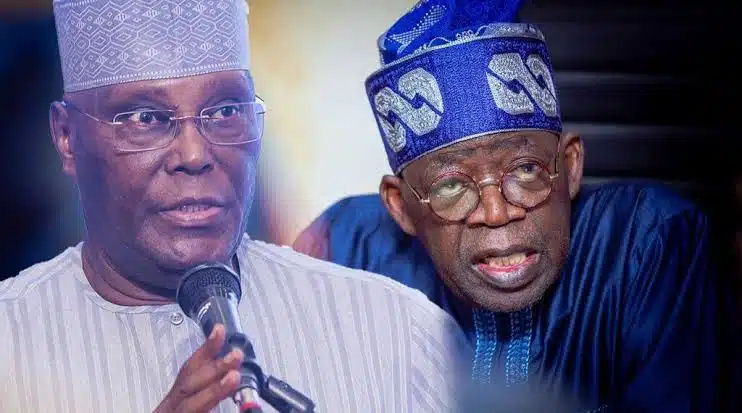
Former Vice President and Presidential candidate of the African Democratic Congress (ADC), Atiku Abubakar, has said his proposed targeted subsidy programme will reduce fuel prices, transport fares and the cost of food across Nigeria.
Atiku made the statement on Friday through his Media Office while reacting to President Bola Tinubu’s proposal to reduce transportation costs nationwide through Compressed Natural Gas (CNG) and electric vehicles.
Tinubu had on Thursday said that “cheaper fuel must mean cheaper transport fares” and announced that the Federal Government had reached an agreement with state governors to cut transport fares nationwide, with implementation expected to begin from October 1.
However, Atiku criticised the proposal, describing it as another “Animal Farm” promise, while questioning the government’s readiness to deliver cheaper fares nationwide by the announced date.
According to Atiku, his proposed targeted subsidy would go beyond reducing fuel prices. He said it would also lower transportation and food costs, support local production, protect consumers and improve Nigerians’ purchasing power.
He questioned the apparent difference between the President’s announcement and the position of the Nigeria Governors’ Forum (NGF).
Atiku noted that while Tinubu said the Federal Government and state governors had agreed on measures to enable Nigerians to benefit from cheaper fares from October 1, the NGF communiqué issued after its August 26 meeting stated that the proposed National Affordable CNG Transit Programme still required further consideration regarding its financing and implementation framework.
He also cited comments by Bayelsa State Governor Douye Diri indicating that the implementation timeline would be developed in consultation with stakeholders.
“That means Nigerians deserve clarity. What exactly will be operational on October 1?” Atiku asked.
The former Vice President also questioned the government’s claim that more than 120,000 vehicles had already been converted to CNG.
He said Nigerians needed to know how many of the converted vehicles were commercial passenger vehicles, how many were actively operating on CNG, and how many commuters were actually benefiting from reduced fares.
He further asked the government to provide details on the states and routes where the programme was currently operational.
Atiku also raised concerns about the availability of CNG infrastructure, stressing that announcing or planning a CNG station did not necessarily mean the facility was operational, adequately supplied or accessible to commercial transport operators.
He urged the Tinubu administration to publish the locations, operational status and commissioning timelines of CNG stations across the country.
The ADC presidential candidate also called for a transparent mechanism to ensure that savings resulting from government support were transferred to commuters.
He proposed that participating operators should have clearly defined fare obligations, including a published baseline fare, reduced fare, identified routes and operators, details of government support, an implementation timetable and an enforcement mechanism for operators who fail to pass the savings to passengers.
Atiku said the government’s previous CNG experience demonstrated the importance of enforcement, recalling that in 2025, the government announced a 40 per cent reduction in fares on CNG-serviced routes in Abuja and deployed a task force to monitor compliance.
He argued that challenges surrounding CNG availability and supply to converted vehicles showed that a fare reduction in Abuja could not automatically translate into a nationwide transportation solution.
“Nigeria is a large country with very different transport systems and levels of CNG infrastructure,” he said.
Atiku therefore called for a state-by-state implementation plan, particularly because access to CNG infrastructure differs across the country.
He urged the Federal and state governments to publish details of the programme, including the number of vehicles and routes covered, participating states, funding commitments, expected fare reductions and enforcement mechanisms.
He also demanded clarity on how the government intends to address areas where CNG infrastructure is not yet available.
According to Atiku, October 1 should not become another political deadline but a measurable deadline for delivery.
He stressed that Nigerians should be able to determine by October 1 how much their transport fares had actually fallen.
“Transport costs do not merely affect commuters; they affect the price of food, goods and services because everything has to be moved from one location to another,” he said.
Atiku said the ultimate test of the government’s programme would not be its announcements but what Nigerians experience at bus stops.
“Nigerians do not pay their transport fares with policy statements; they pay with money they have earned. They do not commute on announcements; they commute on buses.”
He added that the most important announcement Nigerians would want to hear on October 1 was simple: “The fare has come down.”