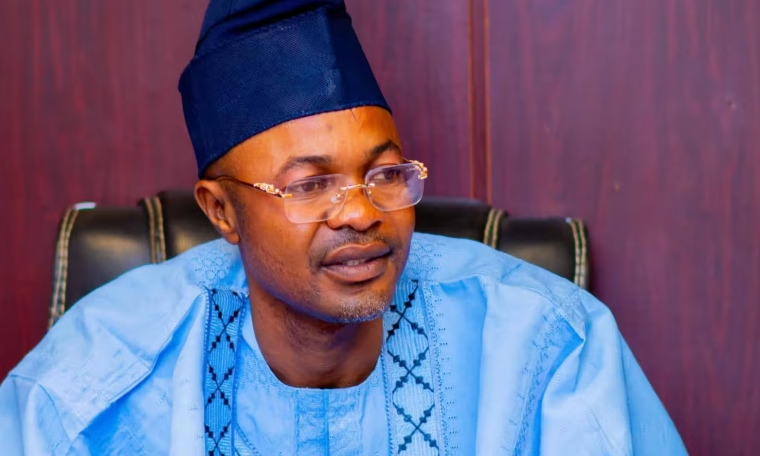
The Chairman of the Independent Corrupt Practices and Other Related Offences Commission (ICPC), Musa Aliyu, has blamed weak institutional controls for allowing the alleged operator of the disowned Presidential Foreign Investment Promotion Council (PFIPC), Adeniyi Adeyemi, to manipulate government processes.
Aliyu made the disclosure on Thursday in Abuja at the fourth Economic Confidential Lecture and National Spokesperson Award.
He said the controversy surrounding the purported agency exposed loopholes within the public sector that could be exploited by individuals using documents that appeared official.
According to him, government institutions must strengthen verification procedures and ensure that officials conduct proper checks before acting on documents presented to them.
“Recently, we have seen what happened on the issue of the vacancy. The system is very, very big. That was why an individual, allegedly, was able to build the system and to get documents to pass through various agencies, and for the agencies to act without due diligence,” Aliyu said.
The ICPC chairman noted that some documents presented to public officials should immediately raise red flags and prompt further verification.
He warned that failure to close gaps in government procedures could leave public institutions vulnerable to manipulation and diversion of resources.
Aliyu also said institutional weaknesses could undermine Nigeria’s efforts to attract foreign direct investment, stressing the need for stronger internal controls, closer scrutiny of official correspondence and greater accountability across government agencies.
Tinubu Orders PFIPC Probe
Aliyu’s remarks come amid an ongoing investigation into the activities of the purported Presidential Foreign Intervention Promotion Council, which the Federal Government has said was never established.
President Bola Tinubu had ordered the ICPC to conduct a comprehensive investigation into the activities of the alleged fictitious council following public controversy over its operations.
In a statement issued on July 7 by the President’s Special Adviser on Information and Strategy, Bayo Onanuga, the Presidency directed the anti-graft agency to submit its findings within 30 days.
The Presidency said the investigation would examine allegations that Adeyemi used forged appointment letters and government documents to present himself as the Director-General of the non-existent council.
He was also accused of falsely claiming to be a presidential appointee while seeking official recognition and diplomatic assistance.
The investigation is expected to examine further claims that Adeyemi sought visa facilitation and opened several bank accounts in the names of purported government agencies using allegedly forged documents.
The allegations remain subject to investigation and have not been established by a court.