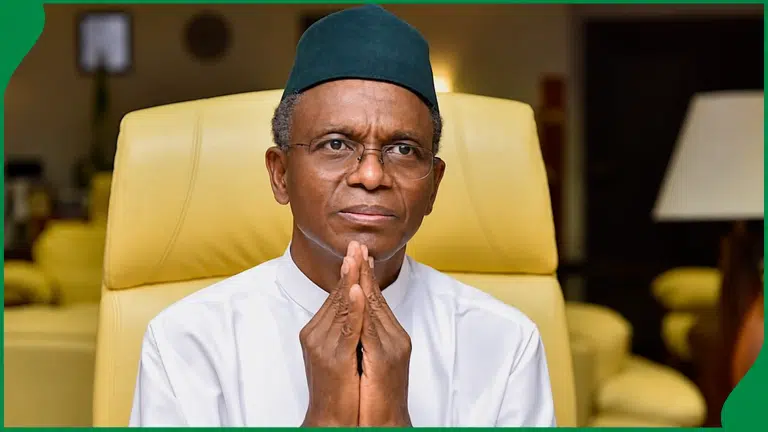
Former Kaduna governor faces corruption-related charges and separate phone-interception case as family raises concerns over detention conditions and medical care
Former Kaduna State Governor, Nasir El-Rufai, has spent 200 days in custody amid a series of legal battles stemming from allegations of financial misconduct and a separate case involving the alleged unlawful interception of telephone communications linked to the National Security Adviser, Nuhu Ribadu.
El-Rufai’s prolonged detention has generated political and legal controversy, with his family, lawyers and political associates raising concerns about the duration and conditions of his custody.
The agencies prosecuting the former governor, however, have maintained that the investigations and court proceedings are being conducted within the framework of the law.
It is important to note that the allegations against El-Rufai remain matters before the courts, and he has pleaded not guilty and consistently denied wrongdoing.
How El-Rufai’s Detention Began
The former governor’s current legal troubles can be traced to investigations following a 2024 report by the Kaduna State House of Assembly on the finances of his administration between 2015 and 2023.
The Assembly alleged that about ₦423 billion was mismanaged during the eight-year period and recommended that relevant anti-corruption agencies investigate El-Rufai and some officials who served under his administration.
The allegations included alleged abuse of office, diversion of public funds, irregularities in contract awards, money laundering and questionable borrowing.
Following the report, the Economic and Financial Crimes Commission (EFCC) invited El-Rufai for questioning.
He honoured the invitation on February 16, 2026, and was subsequently detained at the EFCC headquarters in Abuja.
The former governor has rejected the allegations and described the proceedings as politically motivated.
Alleged Phone Interception
Before his appearance at the EFCC, security operatives were reportedly said to have attempted to arrest El-Rufai at the Nnamdi Azikiwe International Airport in Abuja after his return from Cairo, Egypt.
El-Rufai later alleged that the National Security Adviser, Nuhu Ribadu, was behind the arrest attempt.
He also claimed that he became aware of the alleged order after a telephone conversation involving the NSA was reportedly intercepted.
The Department of State Services (DSS) subsequently instituted a separate criminal case against the former governor over the alleged unlawful interception of Ribadu’s telephone communications.
El-Rufai has denied the allegations.
Transfer to ICPC Custody
After spending about two days in EFCC custody, El-Rufai was transferred to the Independent Corrupt Practices and Other Related Offences Commission (ICPC).
The commission subsequently filed criminal charges against him over allegations connected to his tenure as governor of Kaduna State.
According to the ICPC, the allegations include receiving severance payments allegedly above his lawful entitlement and receiving dollar deposits which the commission claimed were connected to proceeds of unlawful activities.
In April, the ICPC said it filed a 10-count charge against El-Rufai and Joel Adoga at the Federal High Court in Kaduna.
The charges included allegations bordering on conversion and possession of proceeds of corruption and money laundering.
El-Rufai pleaded not guilty.
A separate nine-count case was also filed at the Kaduna State High Court, involving allegations of abuse of office, fraud, conferment of undue advantage, irregular public contracts and unlawful handling of public funds.
Bail Conditions Become Major Issue
The former governor’s continued detention has also been linked to disputes surrounding the conditions attached to his bail.
In one of the proceedings, the Federal High Court in Kaduna granted El-Rufai bail subject to a ₦200 million bond and two sureties in like sum.
One surety was required to be a resident of Kaduna State with property valued at ₦200 million and a verified Certificate of Occupancy, while another was required to be a respected traditional ruler.
The court also ordered the surrender of his international passport and imposed restrictions on his movement.
In the separate Abuja case concerning the alleged phone interception, the court equally imposed bail conditions which his lawyers subsequently argued were difficult to fulfil.
In June, the Federal High Court in Abuja declined an application seeking a review of the bail conditions after the DSS concluded its case.
The matter was adjourned until September 22, 2026, for the adoption of the defence’s no-case submission.
Temporary Release for Mother’s Burial
El-Rufai’s detention was briefly interrupted in March following the death of his mother, Hajiya Umma El-Rufai, in Cairo.
The ICPC temporarily released him on compassionate grounds to enable him to attend the funeral rites.
He later returned to custody and appeared before the court in Kaduna.
Family Raises Health Concerns
Health concerns have also featured prominently in the controversy surrounding El-Rufai’s detention.
In June, a family member reportedly told Daily Trust that a doctor at the National Hospital in Abuja had raised concerns about the former governor’s health, including the possibility of a prostate-related condition.
The family alleged that his health had deteriorated and expressed concerns about access to adequate medical attention.
However, the family also acknowledged that the ICPC had been taking El-Rufai to hospital and permitting relatives to bring food to him.
His media aide, Muyiwa Adekeye, separately raised concerns over an eye condition, alleging that the former governor developed swollen, reddish and itchy eyes while in custody.
ICPC Rejects Claims of Denial of Medical Care
The ICPC has rejected suggestions that it deliberately denied El-Rufai medical treatment.
The commission said it facilitated a court-approved medical visit to the private wing of the National Hospital in Abuja on July 7.
According to the agency, El-Rufai was examined by an oncologist while ICPC officers remained outside the consultation room to respect his privacy.
The commission later alleged that the medical visit was used for activities beyond the purpose for which it had been authorised.
It said photographs showed El-Rufai meeting political associates during the period designated for the medical consultation.
The ICPC subsequently announced the arrest of El-Rufai’s personal physician, Professor Bello Abubakar, over allegations relating to statements made concerning the medical visit.
El-Rufai’s camp and his political allies disputed the commission’s account.
Claims Described as Defamatory
The controversy surrounding the former governor has also generated competing public claims and counterclaims.
Some statements and descriptions concerning the matter have been challenged as defamatory, including claims discussed in public commentary by media personality Reuben Abati.
Given that several aspects of the matter remain before the courts, the allegations should be treated as allegations rather than established facts.
Neither the filing of criminal charges nor continued detention, by itself, constitutes a judicial finding of guilt.
Fresh ₦10bn Fundamental Rights Suit
The legal dispute over El-Rufai’s detention continued into August when the former governor filed a ₦10 billion fundamental rights suit against the ICPC.
In the suit filed at the Federal High Court in Abuja, El-Rufai alleged that his access to members of his family had been restricted.
He reportedly alleged that his wife and son had been prevented from visiting him and raised concerns about access to food, medication and other necessities.
The family also raised concerns about access to El-Rufai’s personal physicians.
The ICPC has maintained that visits to detainees are governed by security regulations and that authorised family members, lawyers and medical personnel are permitted access within stipulated periods.
What Lies Ahead
As El-Rufai marks 200 days in custody, the legal controversies surrounding his detention remain unresolved.
The former governor faces multiple criminal allegations in Kaduna and Abuja, all of which he has denied.
While courts have granted bail in some of the proceedings, the conditions attached to the orders have remained a major point of contention between the defence and prosecuting authorities.
The Abuja phone-interception case is scheduled to return on September 22, 2026, for the adoption of the defence’s no-case submission, while the corruption-related proceedings in Kaduna continue.
For now, El-Rufai remains in custody as the courts continue to determine the allegations against him.
The outcome of the ongoing proceedings will ultimately determine whether the allegations are substantiated or dismissed.