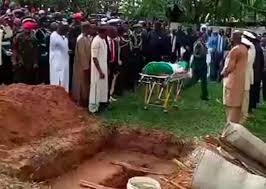
A heavy cloud of grief and solemn reflection settled over Daura, Katsina State, on Tuesday as the remains of former President Muhammadu Buhari were laid to rest in his hometown.
The atmosphere was laden with sorrow and emotion as the lifeless body of the 82-year-old statesman was lowered into the earth at exactly 5:50 p.m. His casket, wrapped in the green-white-green colours of the Nigerian flag, was surrounded by weeping children, family members, close associates, and well-wishers.
Full military honours, including gun salutes and ceremonial processions, were accorded in recognition of his role as a former Commander-in-Chief of the Armed Forces. Islamic burial rites were observed before the interment in accordance with tradition.
Daura, the modest agrarian town in North-West Nigeria where Buhari was born and has now returned in death, stood still in mourning. To many in the North and beyond, he was affectionately known as “Mai Gaskiya”—a Hausa term for “the truth-teller.”
Buhari’s leadership spanned over nine years and eight months, covering both military and democratic eras. His long tenure in office places him among Nigeria’s most enduring leaders, remembered for his austere lifestyle, controversial policies, and unwavering influence.