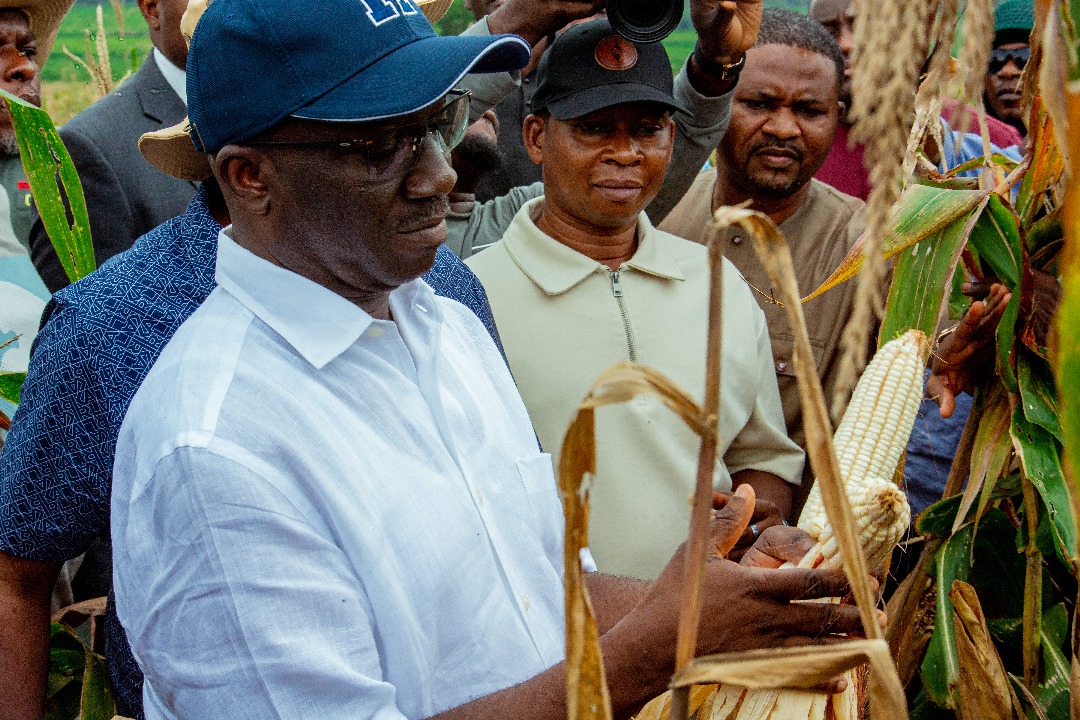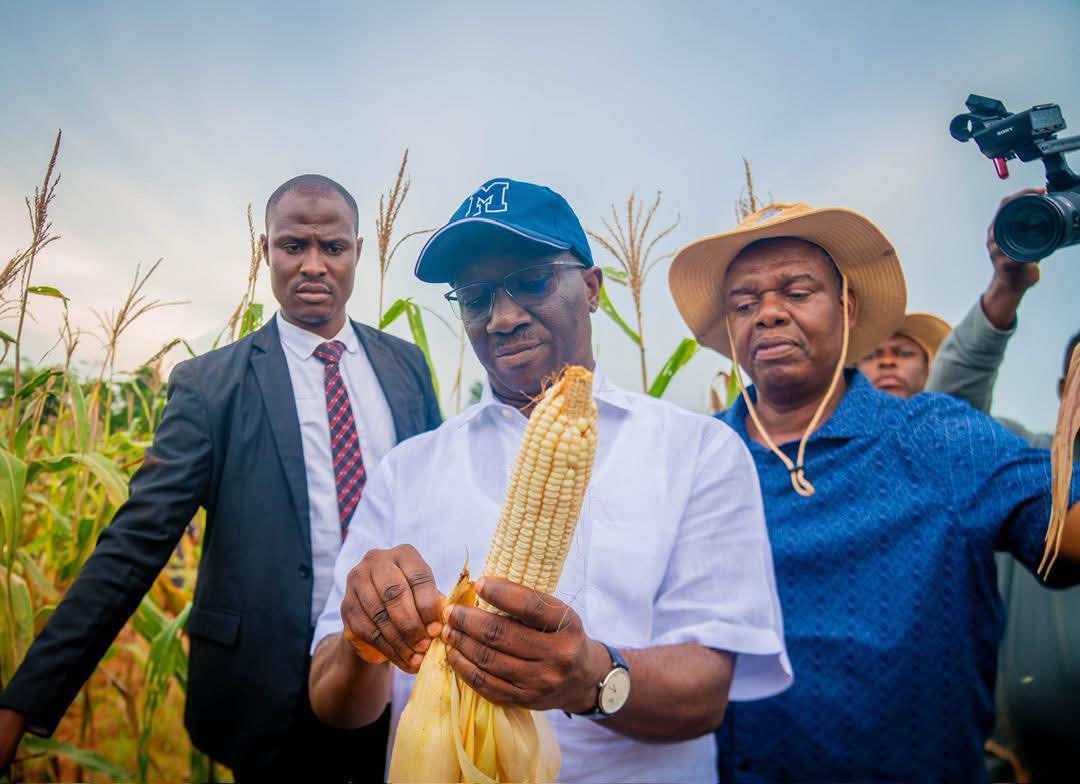
Edo State Governor, Senator Monday Okpebholo’s Agricultural Revolution Policy is beginning to deliver visible results, particularly in maize production, following a successful harvest at the state-owned Udomi Farm Settlement in Esan Central Local Government Area.
Speaking to journalists on the outcome of Phase One of the state’s “Back to Farm Initiative,” the Commissioner for Agriculture and Food Security, Dr. Jerry Uwangue, said the state is projecting over a 100 per cent return on investment due to the massive success recorded so far.
Dr. Uwangue explained that harvesting is currently ongoing at the Udomi Farm, while land clearing has also commenced in preparation for the 2026 farming season. He said the development reaffirms the Okpebholo administration’s commitment to food security, job creation and economic diversification through large-scale agricultural production.
“Last Sunday, we were at Udomi Farm to harvest maize and also inspect the land preparation for the next farming season,” he said. “Phase One of the ‘Back to Farm Initiative’ has just been concluded, and we are expecting over 100 per cent return on investment. Phase Two is about to commence, and there is a lot to look forward to.”
Governor Okpebholo, during a recent visit to the farm, reiterated his administration’s commitment to practical, result-driven governance and economic diversification, with agriculture playing a central role.
Dr. Uwangue further disclosed that the state has adopted a cluster farming model to ensure efficiency and security. Under the arrangement, farmers are grouped together, land is cleared by the government, and farming activities are closely monitored with adequate security provided.
“What the governor directed is cluster farming. We clear the land, bring farmers together to farm as a group, monitor activities and ensure security,” he said. “We are building our base with personnel, equipment and security to guarantee smooth farming operations across Edo South, Central and North Senatorial Districts.”
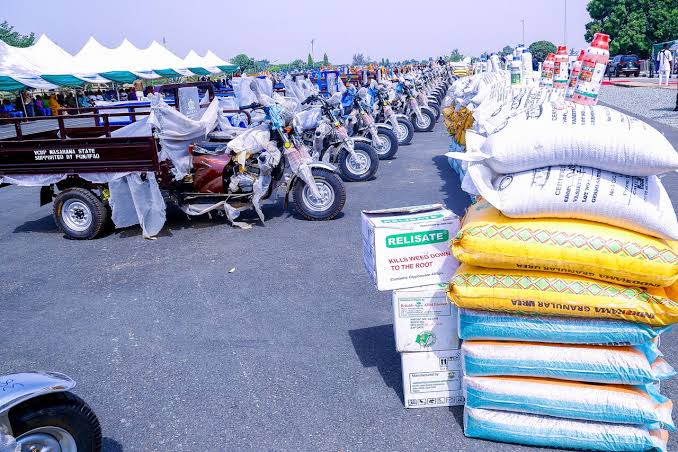
He added that farmers would be supported with seedlings, equipment, technical guidance and guaranteed off-takers, all under the supervision of the Ministry of Agriculture and Food Security.
Highlighting the success of the Udomi maize project tagged “From the Soil to the Sack,” Dr. Uwangue expressed satisfaction with the returns being generated from the over 100 hectares cultivated. He said the maize harvest is currently meant for domestic consumption, with plans to expand production as over 60 per cent of the remaining land is being cleared.
“Our harvest is for local consumption, not export,” he explained. “We cultivated about 118 hectares this season. Our immediate goal is to meet local demand and satisfy our people before expanding and eventually exporting.”
He noted that while maize was the focus of the last farming season, the state is also investing in cassava, cocoa and oil palm value chains to further strengthen food production and economic growth.
Beyond the Udomi success story, Dr. Uwangue revealed that the state government has concluded soil analysis tests at the Iguoriakhi Farm Settlement and other locations across Edo South and North Senatorial Districts. He said the tests would guide the deployment of improved seedlings and enhance productivity across the state’s agricultural clusters.