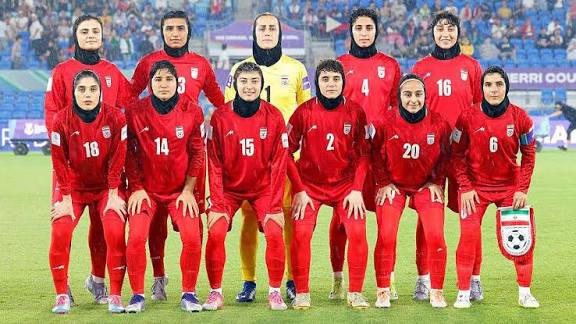
Members of the Iranian women’s national football team may face severe consequences after their 2-0 defeat to the Philippines on Sunday, March 8, which ended their Women’s Asian Cup campaign. The situation has raised concerns about the players’ safety under Iran’s strict political climate.
The tournament was already fraught with controversy, as the team reportedly refused to sing the Iranian national anthem during a previous match. Foreign Minister Penny Wong of Australia expressed solidarity with the players, highlighting fears that some could be jailed or even killed if they return home.
Thousands of Australians have signed petitions urging the Albanese Government to act to protect the team, describing the players’ predicament as an “impossible situation” — caught between returning to Iran, where they may face accusations of treason, or risking their families’ safety if they remain abroad.
The petition also raised concerns that regime-connected personnel traveled with the team, restricting their movements and communications, and warned that any player seeking protection should be able to do so safely and privately.
“It has been really moving for Australians to see them in Australia,” Wong told ABC’s Insiders, noting the solidarity displayed during jersey swaps with the Matildas. “We know this regime has brutally oppressed many Iranian women and girls, and we stand in solidarity with them.”
Tragically, the team has already lost players to violent repression. Zahra Azadpour, 27, was gunned down by Iranian forces in January while protesting in Karaj, and 23-year-old referee Sabha Rashtian was shot dead during protests in Isfahan.
Iran International sports journalist Raha Pourbakhsh reported that the players have been under significant duress while in Australia, with threats to their careers, enforced agreements not to seek asylum, and pressure to perform patriotic gestures, including singing the anthem and showing joy when scoring.
Sources close to the team have indicated that seeking asylum in Australia is not feasible for most players, as their families remain under threat in Iran. The situation underscores the continuing risks faced by Iranian women athletes who challenge state expectations.