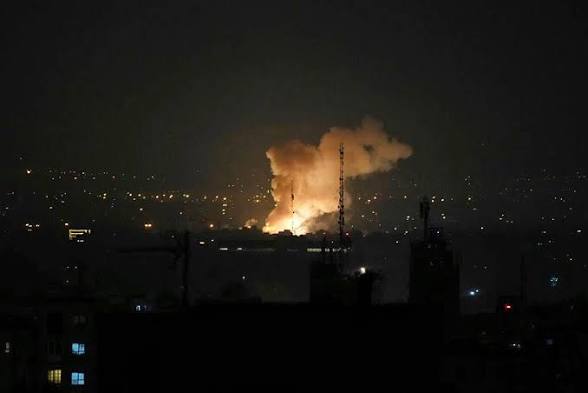
Iran launched multiple waves of missiles into Israel on Tuesday morning, March 24, triggering air raid sirens across major cities, including Tel Aviv, according to the Israeli military.
Explosions were reported in Tel Aviv, where a multi-storey residential building sustained significant damage. Emergency responders said rescue operations were ongoing to reach civilians trapped in affected structures, while others sought refuge in designated shelters.
The escalation followed an announcement by U.S. President Donald Trump that Washington would temporarily pause planned strikes on Iran’s energy infrastructure, citing what he described as “productive” discussions with Iranian officials aimed at reducing tensions in the Middle East.
However, Iranian authorities rejected claims of negotiations. Iran’s parliament speaker, Mohammad Baqer Qalibaf, dismissed Trump’s remarks as “fake news,” accusing the United States of attempting to manipulate global financial and oil markets. The Islamic Revolutionary Guard Corps also described the statements as psychological tactics that would not influence its military strategy.
Meanwhile, Israel confirmed that its air force carried out extensive strikes in Tehran, targeting key military and intelligence facilities, including locations linked to the Islamic Revolutionary Guard Corps and missile infrastructure. Officials said dozens of strategic targets were hit during the operation.
The intensifying conflict has heightened global concerns, particularly around the Strait of Hormuz, a vital route for international oil and gas shipments. Iran’s activities in the region have raised fears of potential disruptions to global energy supplies.
Despite signals from Washington suggesting possible diplomatic engagement, both sides continue military operations, with analysts warning that the risk of a broader regional escalation remains high.