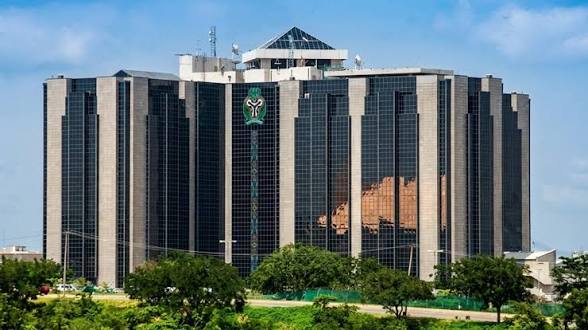
The Central Bank of Nigeria (CBN) has issued new baseline standards requiring financial institutions to implement automated anti-money laundering (AML) systems to detect suspicious transactions and strengthen compliance with financial crime regulations.
Outlined in a circular dated March 10, 2026, titled “Issuance of Baseline Standards for Automated Anti-Money Laundering (AML) Solution for Financial Institutions in Nigeria,” the directive applies to deposit money banks, mobile money operators, international money transfer operators, payment service providers, and other regulated institutions. The circular was signed by Akinwunmi Olubukola and Olubunmi Ayodele-Oni.
The CBN explained that the move aims to enhance Nigeria’s financial crime detection framework amid increasing digitisation of financial services. Automated AML platforms are expected to support customer identification, risk assessment, sanctions screening, transaction monitoring, case management, investigations, and regulatory reporting. The systems must integrate with core banking and operational platforms for comprehensive oversight.
“Manual AML/CFT/CPF controls are no longer sufficient to manage evolving risks,” the circular stated. Financial institutions are encouraged to incorporate advanced technologies such as artificial intelligence, machine learning, and predictive analytics, with mandatory annual independent validation to ensure accuracy, fairness, and governance.
Under the directive, deposit money banks have 18 months to comply, while other financial institutions have 24 months. Institutions must submit implementation roadmaps to the CBN within three months of the issuance. AML systems must screen against domestic and international sanctions lists, politically exposed persons registers, internal watchlists, and adverse media sources, with the ability to block flagged transactions.
The framework also encourages automated fraud monitoring across electronic channels, card payments, deposits, and lending platforms. Compliance will be monitored through off-site surveillance, on-site examinations, and thematic regulatory reviews, with non-compliant institutions subject to remedial directives, sanctions, and penalties.
The CBN emphasized that these standards represent the minimum compliance threshold, and institutions may be required to implement stronger controls depending on operational complexity and risk profile. The regulator expects the initiative to reinforce Nigeria’s capacity to prevent, detect, and report money laundering, terrorism financing, and proliferation financing, while maintaining financial system integrity and stability.