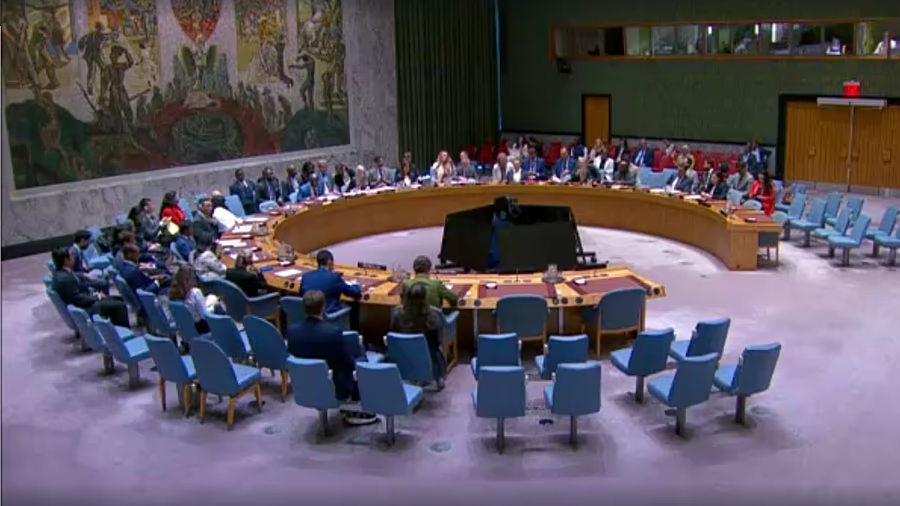
The United Nations Security Council has unanimously adopted a resolution extending sanctions against armed groups and individuals operating in the Central African Republic (CAR) until July 31, 2027.
The sanctions include asset freezes, travel bans, and restrictions on the supply of weapons and military equipment to armed groups.
While Council members acknowledged progress made by the Central African Republic in democratic governance, security, and the restoration of state authority, they warned that armed groups and cross-border arms networks continue to pose a threat to the country’s stability, particularly in border regions.
Speaking ahead of the vote, France’s Ambassador to the UN, Jérôme Bonnafont, said significant progress had been recorded in the country in recent years but stressed that the security situation remained fragile.
Bonnafont said the United Nations had a responsibility to support the Central African Republic in its efforts to combat armed groups and individuals whose activities continue to undermine the country’s stability.
Meanwhile, CAR’s Ambassador to the UN, Marius Aristide Hoja Nzessioué, questioned how armed groups continued to obtain weapons despite the existing sanctions regime.
“What are the networks for this? Who finances these activities and benefits from them? These questions are at the heart of the effectiveness of the sanctions,” he said.
Nzessioué called on all parties to comply strictly with the sanctions and stressed the need to trace the sources and supply networks behind the flow of weapons.
He warned that without identifying the mechanisms sustaining armed groups, sanctions could only provide temporary relief before the groups rebuild their capabilities through new supply channels.
The renewed sanctions are expected to remain in force until July 31, 2027, as the international community continues efforts to strengthen peace, security, and state authority in the Central African Republic.