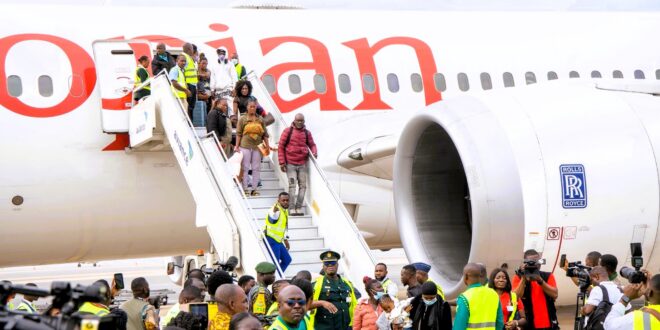
The Government of Ghana has announced that an additional 1,000 Ghanaian migrant workers are expected to return home on Sunday and Monday as part of the final phase of its emergency evacuation from South Africa, where escalating xenophobic violence has targeted foreign nationals.
The latest group follows the successful evacuation of 926 Ghanaians who were earlier repatriated after violent protests and attacks against migrants intensified across parts of South Africa. Ghanaian authorities said the operation marks the conclusion of the country’s organized evacuation effort aimed at ensuring the safety of its citizens.
In a statement, Ghana’s Ministry of Foreign Affairs confirmed that the returning migrants represent the last batch of nationals scheduled for evacuation under the government’s emergency response plan.
President John Mahama has strongly condemned the attacks, describing the violence as unacceptable and urging African leaders to take decisive action. He called on the African Union (AU) to place the growing wave of xenophobic attacks in South Africa high on its agenda, arguing that the Pretoria government has not done enough to protect foreign nationals and prevent recurring violence.
Mahama stressed that Africans should not become targets of discrimination and violence within the continent, emphasizing the need for stronger regional cooperation to safeguard the rights and dignity of migrants living and working in African countries.
The latest evacuation comes amid reports that more than 160,000 foreign nationals have left South Africa over the past two months as hostility toward undocumented migrants continued to rise. The surge in departures reflects growing fears among migrant communities following repeated protests, attacks on businesses owned by foreigners, and calls by some groups for stricter immigration enforcement.
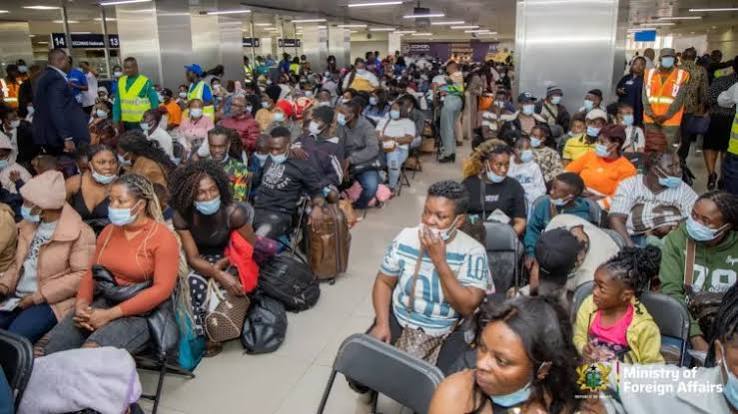
South Africa has witnessed several waves of xenophobic violence over the years, with migrants from various African countries often bearing the brunt of attacks fueled by unemployment, economic hardship, and social tensions. The recent developments have renewed calls for stronger action by both the South African government and regional bodies to address the root causes of the crisis and ensure the protection of all residents regardless of nationality.