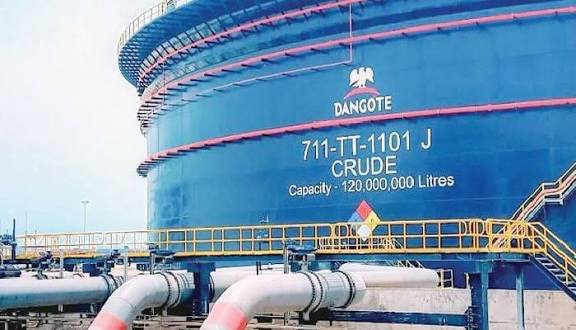
Petrol prices in Nigeria could rise to about N1,400 per litre this week as marketers await a possible repricing of Premium Motor Spirit (PMS) by the Dangote Petroleum Refinery amid rising crude oil prices, supply constraints and logistics challenges.
Industry sources said petrol loading activities were temporarily halted at the refinery, raising expectations that a new ex-depot price adjustment could be announced soon.
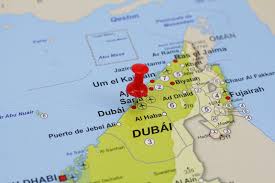
The development comes as global crude oil prices climb due to escalating tensions in the Middle East, a situation that has increased feedstock costs for refiners and tightened supply in international energy markets.
With pump prices already averaging around N1,200 per litre in some parts of the country, marketers warned that the price could rise to about N1,400 per litre if crude oil continues its upward trend towards $100 per barrel.
The National President of the Petroleum Products Retail Outlets Owners Association of Nigeria, Dr. Billy Gillis-Harry, confirmed that marketers were unable to load petrol from the refinery on Sunday.
“Today we didn’t load and we are not sure what will happen tomorrow. It is because of the possibilities around crude oil prices. The price of crude is not stable; it can go up or come down. Until the crisis in the Middle East de-escalates, it is difficult to predict what will happen,” Gillis-Harry said.
Sources within the Major Energy Marketers Association of Nigeria also indicated that loading activities were suspended as operators await clarity on the refinery’s next pricing decision.
Similarly, the Nigerian Association of Road Transport Owners confirmed that tanker drivers were not lifting products from the refinery, noting that only a few marketers, including MRS Oil Nigeria Plc and NNPC Retail Limited, were reportedly allowed to load products.
An industry analyst, Jide Pratt, said the expected repricing would likely reflect prevailing international crude oil prices rather than earlier ex-depot benchmarks.
He noted that the refinery has faced challenges securing adequate crude supplies locally, forcing it to source additional feedstock from international markets.
“This shows the risk of having a single dominant supply source for the market,” Pratt said.
However, the Dangote Group dismissed claims that loading activities had been halted. The company’s Chief Corporate Communications Officer, Anthony Chiejina, described the reports as “nonsense,” maintaining that product pricing would continue to reflect prevailing international market conditions.
Retail market checks across major filling stations in Lagos showed petrol selling above N1,000 per litre, with pump prices ranging between N1,015 and N1,057 depending on location and supply arrangements.
At a Mobil station along the LASU–Isheri Road in Idowu Egba, petrol sold for N1,015 per litre, while a Petrocam station dispensed fuel at N1,050 per litre.
Similarly, MRS outlets sold petrol between N1,030 and N1,040 per litre in parts of Alimosho, while Mobil stations in Alaguntan and Iyana Ipaja sold the product at N1,015 and N1,057 per litre respectively.
Other stations recorded similar pricing trends, with Heyden Petroleum stations in Iyana Ipaja and along the Oshodi–Abeokuta Expressway selling PMS at about N1,035 per litre, while Northwest Petroleum in Maryland dispensed petrol at around N1,030 per litre.
According to the Major Energies Marketers Association of Nigeria, the ex-depot price of PMS in Lagos currently ranges between N940 and N1,000 per litre, reflecting the cost pressures marketers face in sourcing and distributing the product.
The association’s latest energy bulletin shows that Nigeria’s estimated import parity price averaged about N748.46 per litre over the past 30 days, while spot market prices rose to about N910 per litre, highlighting volatility in global petroleum trading.
For many motorists, however, these technical pricing dynamics offer little comfort.
Commercial driver Ibrahim Lawal, who operates along the Iyana Ipaja–Oshodi corridor, said the rising fuel price could force transport operators to review fares again.
“Fuel is now over N1,000 per litre in many stations. Every time the price changes, transport fares must go up. But passengers are already struggling,” he said.
Another motorist, Saheed Adeyemi, lamented the uncertainty around pump prices.
“Some stations sell for N1,030, others for N1,050, and sometimes even higher. As motorists, we now spend time driving from one station to another looking for cheaper fuel,” he said.
Market intelligence from the Major Energies Marketers Association of Nigeria indicates that international crude benchmarks remain elevated, with Brent crude trading around $85 per barrel and Nigeria’s Bonny Light crude oilhovering above $83 per barrel.
The Dangote refinery noted that Nigerian crude currently trades between $3 and $6 above the Brent benchmark. When freight charges of about $3.50 per barrel are included, landing costs could range between $88 and $91 per barrel.
The company also disclosed that it currently receives about five cargoes of crude monthly from Nigerian National Petroleum Company Limited, far below the estimated 13 cargoes required monthly to sustain large-scale domestic distribution.
This supply shortfall forces the refinery to procure additional crude from international markets at prevailing foreign exchange rates, further exposing the domestic market to currency volatility.
The refinery said it has absorbed about 20 per cent of the recent cost increase to moderate the impact on consumers, although industry operators warn that long-term stability will depend on improved crude supply logistics and foreign exchange availability.
Meanwhile, rising geopolitical tensions in the Middle East are already pushing up operating costs across Nigeria’s fragile energy system, with businesses and manufacturers facing higher energy bills and the possibility of another round of increases in air travel fares.
Industry estimates suggest Nigerian manufacturers could spend at least N620 billion on diesel in March as companies rely more heavily on self-generated power due to declining electricity supply and surging global energy prices.