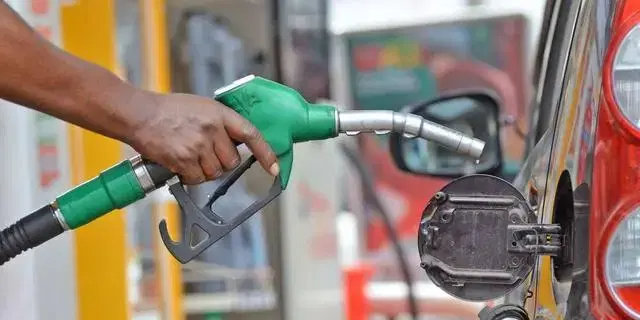
Petroleum marketers have warned that the pump price of Premium Motor Spirit (PMS), popularly known as petrol, could surpass ₦1,000 per litre following President Bola Tinubu’s approval of a 15 per cent ad valorem import tariff on fuel imports.
The new policy, which takes effect after a 30-day transition period ending November 21, 2025, is designed to protect local refineries and curb the influx of cheaper imported fuel that threatens domestic refining investments.
However, industry operators and stakeholders say the move could have adverse short-term effects, pushing fuel prices beyond the reach of average Nigerians.
Depot operators who spoke with sources on Thursday said the decision would likely worsen the situation in the downstream sector, where petrol already sells for an average of ₦920 per litre.
“As it is, the price of fuel may go above ₦1,000 per litre. I don’t know why the government will be adding more to people’s suffering,” one depot operator lamented.
Another operator alleged that some importers were aligning with the Dangote Refinery, resulting in coordinated price increases. “Let’s just wait and see what happens next,” he said.
They warned that without clear market-stabilisation mechanisms, the tariff could trigger fresh price hikes and deepen the hardship faced by consumers
The National Vice-President of the Independent Petroleum Marketers Association of Nigeria (IPMAN), Hammed Fashola, acknowledged both the positive and negative sides of the policy.
“The 15 per cent tariff on imported fuel has its implications. It might push prices up but could also discourage importation and promote local refining,” he said.
Fashola, however, cautioned that failure by local refineries to meet domestic demand could lead to scarcity.
“If local refiners fail to deliver, there will be scarcity because people will have no alternative,” he warned.
He also dismissed concerns that the move violates the Petroleum Industry Act (PIA), stressing that the government would act within the law.
“My advice to NNPC is to fast-track the rehabilitation of the Port Harcourt, Warri and Kaduna refineries. When all refineries are running, competition will return and fears of monopoly will disappear,” he added.
The National President of the Petroleum Products Retail Outlet Owners Association of Nigeria (PETROAN), Billy Gillis-Harry, described the policy as a “win-win situation,” though he admitted it could test the market.
“We want product availability and affordability. If we push everyone out of business, fuel will become scarce, and prices will rise,” he said.
He also noted that “everyone is working with Dangote, but he alone cannot meet national demand.”
In a letter dated October 21, 2025, and addressed to key regulatory agencies, President Tinubu approved the tariff following a proposal by Federal Inland Revenue Service (FIRS) Chairman, Zacch Adedeji.
The measure, described as a market-responsive import tariff framework, seeks to align import costs with local production realities and strengthen the naira-based oil economy.
The 15 per cent duty—applied on the cost, insurance and freight (CIF) value of imported petrol and diesel—is expected to raise landing costs by about ₦99.72 per litre, translating to roughly ₦1.92 billion in daily additional import costs.
Despite this, government projections show pump prices in Lagos could remain around ₦964.72 per litre ($0.62), still below regional averages such as Senegal ($1.76), Côte d’Ivoire ($1.52) and Ghana ($1.37).
Adedeji said the policy is not revenue-driven but corrective, aimed at protecting domestic producers from unfair competition and ensuring energy security.
He warned that continued price misalignment between imported and locally refined products could destabilise the emerging refining sector.
The Nigerian Midstream and Downstream Petroleum Regulatory Authority (NMDPRA) confirmed readiness to implement the directive once formally received.
“We are the sector regulator, and once the policy takes effect, we will midwife the process on behalf of the government,” said NMDPRA spokesperson George Ene-Ita.
He added that market forces would ultimately determine pump prices in the deregulated downstream sector.
“Prices may rise, remain the same, or even drop depending on competition and market realities,” he said.
Energy expert Olatide Jeremiah warned that the new tariff would inevitably add about ₦100 per litre to the landing cost of fuel, potentially distorting market competition.
“This move may boost government revenue but could also create short-term energy insecurity,” he said.
Similarly, a chieftain of the All Progressives Congress (APC) in Delta State, Chief Ayiri Emami, criticised the policy, calling for its suspension.
“Anybody advising the President to impose a 15 per cent tax on fuel right now is not doing him any good. It will hurt ordinary Nigerians, not marketers,” Emami told journalists in Abuja.
He urged the government to provide economic relief before implementing the tariff, warning that rising fuel prices have already crippled livelihoods in rural and riverine areas
The policy has sparked mixed reactions on social media.
While some users criticised it as anti-people and monopolistic, others hailed it as a strategic step to protect local industry and strengthen the naira.
Tech entrepreneur @markessien called it “a good step that will protect Nigeria’s emerging refining sector,” while another user, @haneefdin, thanked the President for “supporting domestic production.”
Conversely, critics such as @Rufyb described it as “short-sighted,” warning that the tariff, alongside a 5 per cent fuel surcharge due in January 2026, could push petrol prices further beyond reach
Despite progress in local refining—led by the 650,000 barrels-per-day Dangote Refinery and several modular refineries—imports still account for about 69 per cent of national petrol demand between August 2024 and October 2025.
Under the presidential directive, the NMDPRA will issue regulations prioritising locally refined products in import licensing and review the tariff periodically as domestic refining capacity expands.