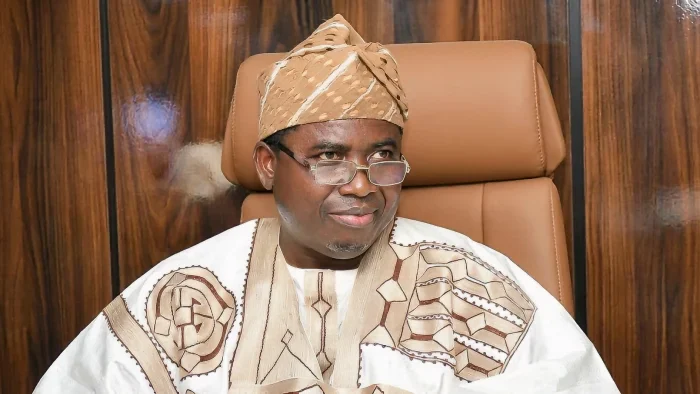
A former Political and Economic Adviser at the World Bank, Dr. Mahmoud Alfa, has called on Nigerians to support the forthcoming 2026 tax reform law, stressing that the success of President Bola Tinubu’s fiscal agenda depends on public trust and responsible governance.
In a statement issued on Friday in Abuja, the Kogi-born economist commended the Tinubu administration for implementing what he described as “bold and necessary economic reforms,” noting that they are beginning to yield positive results despite widespread scepticism.
Dr. Alfa observed that Nigeria remains under-taxed compared to many other economies, even though businesses continue to face multiple levies, especially in the trade and commerce sectors.
“While the Tinubu-led administration has promised reforms to address multiple taxation and improve the ease of doing business, the reality for many citizens—particularly traders—is that they still grapple with overlapping taxes. Nonetheless, there are visible signs of progress,” he said.
The Chief Executive Officer of Vibranium Group acknowledged public concern over the new tax law, which is set to take effect on January 1, 2026, but maintained that taxation is fundamental to national development.
“The essence of taxation cannot be overemphasised. Advanced nations owe much of their progress to effective tax systems. In Nigeria, however, we still rely heavily on debt to finance infrastructure because citizens do not trust government enough to pay taxes willingly,” Alfa stated.
He noted that tax evasion remains widespread in Nigeria, with limited accountability in the use of public funds. According to him, rebuilding mutual trust between citizens and government is crucial for sustainable fiscal growth.
“In Nigeria, people evade taxes without consequence. This shows we are under-taxed compared to countries like the UK and Spain. Refusing to pay tax is a crime—just as mismanaging tax revenue is. Both issues must be addressed together,” he added.
Alfa also commended the Chairman of the Presidential Committee on Fiscal Policy and Tax Reforms, Mr. Taiwo Oyedele, for leading extensive public engagement and sensitisation efforts on the forthcoming reforms.
His comments follow Oyedele’s recent projection that Nigerian states could generate over ₦4 trillion annually from 2026 when the new Value Added Tax (VAT) reforms come into effect. Speaking at the launch of the BudgIT State of States 2025 Report in Abuja, Oyedele disclosed that states’ share of VAT revenue would rise to 55 per cent, creating opportunities for greater fiscal autonomy.
He further noted that while the Federation Account Allocation Committee (FAAC) disbursements had more than doubled—from ₦5.4 trillion in 2023 to ₦11.4 trillion in 2024—ordinary Nigerians were yet to feel any tangible improvement in their living conditions.
“States are receiving more money than ever before, yet there’s a paradox—governments have more naira, but citizens have less disposable income,” Oyedele lamented.
He urged state governors to channel the additional revenues into infrastructure, education, and healthcare, warning that poor fiscal discipline could derail the gains of the ongoing reforms.